I’m just going to say it. A lot of people try digital card games because they want that moment where the table actually feels like a real hangout. Not just sterile avatars sliding chips back and forth, but a place where opponents talk trash, share stories, and react to every bad beat.
Most games don’t get close.
Poker Night at the Inventory is one of the few that does, and yeah, this is where the whole “crossover event” angle actually starts making sense.
You’re Not Just Playing Poker, You’re Sitting at the Table
The difference with Poker Night is how much focus goes into the atmosphere around the cards.
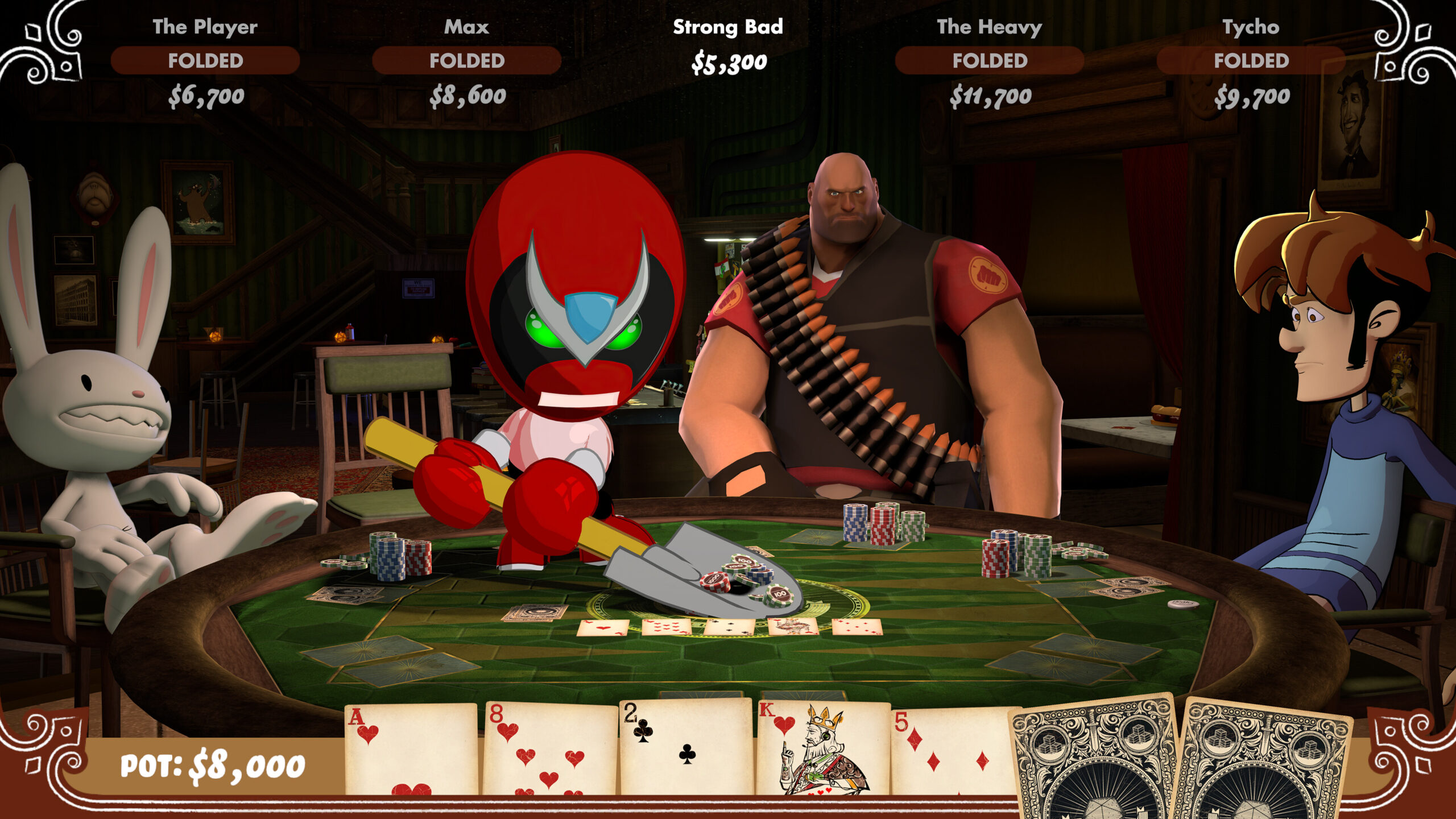
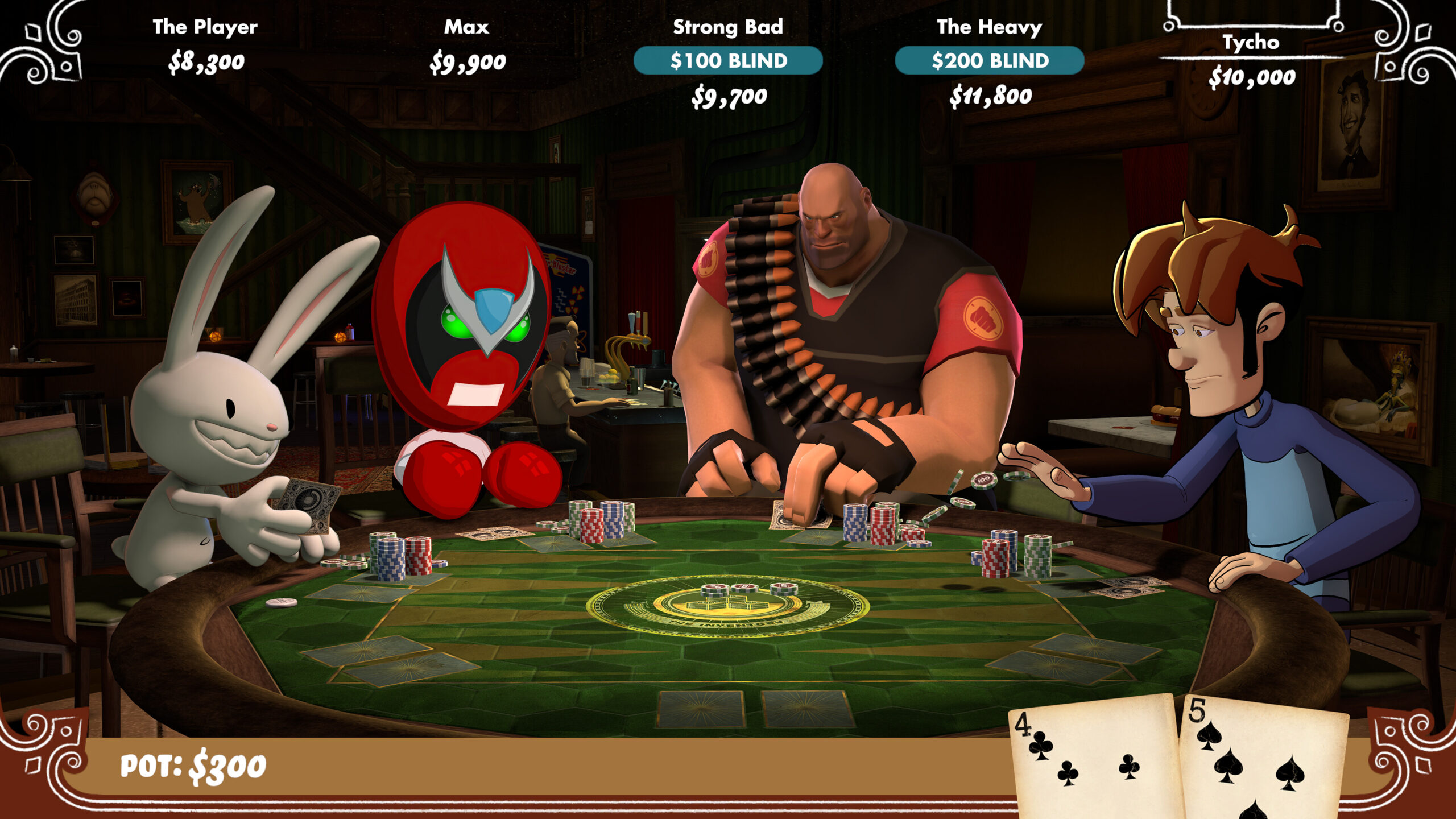
You’re not just staring at a top-down felt board. You’re sitting across from Max, Strong Bad, Tycho, and the Heavy. You watch their tells, listen to their unhinged conversations, and see how they react to your specific plays.
And the important part is the game actually commits to the bit.
They don’t just bark one-liners into the void. They talk to each other. Over time, their dynamic starts to feel like a genuine, chaotic Friday night game instead of just a licensed gimmick.
That’s where it clicks.
Banter That Doesn’t Immediately Break Immersion
This is where most crossover games fall apart.
You put a bunch of famous characters in a room, and suddenly they feel like stiff action figures regurgitating their catchphrases with zero chemistry.
Poker Night holds it together much better.
The dialogue flows. Conversations organically branch depending on who is winning, who just went all-in, or who got knocked out. You can sit there listening to the Heavy try to understand Strong Bad’s emails without the illusion collapsing every few minutes.
It’s not perfect, but it’s good enough that you stop thinking about the mechanics and start focusing on the table talk.
It’s Less “Game,” More Digital Hangout
There’s no massive campaign here. No “save the world” stakes.
What you get instead is a mood.
You can boot up a tournament, unlock some cosmetic decks, and just vibe in an underground club with characters from entirely different franchises. That casual persistence is what gives it that “alive” feeling.
It’s closer to an interactive comedy podcast than a structured sports sim.
And honestly, that’s why it works for this kind of experience.
The Catch: You Have to Actually Pay Attention
Poker Night doesn’t carry you.
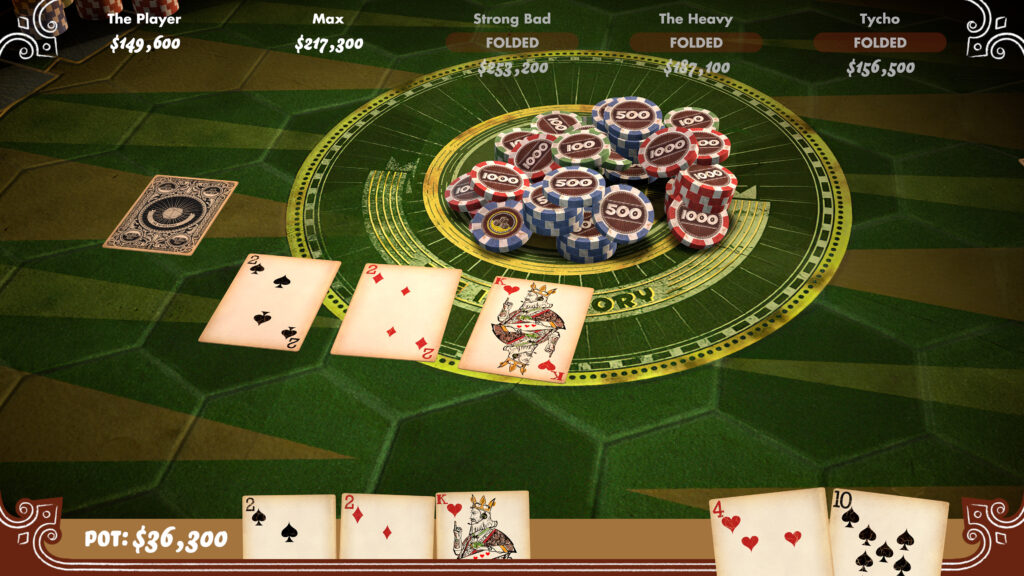
If you just aggressively fold every hand to speed up the dialogue, you’re going to miss the actual tension that triggers the best reactions. If you don’t know the absolute basics of Texas Hold’em, the characters will ruthlessly take your chips.
But if you play the game and soak in the pacing, the payoff is way higher than most casual card games.
You’re not just playing a simulation. You’re part of the punchline.
Why This Actually Hits Different
A lot of digital card games try to simulate competitive esports. Ranks, ladders, flawless RNG.
Poker Night proves that’s not always what people want.
Sometimes, what you’re really looking for is personality. Charm. The feeling that you’re just kicking back with an impossible cast of characters in a dimly lit room.
That’s what makes the whole “gaming crossover” idea land here. Not in an Avengers-style battle, but in how sitting around a table shooting the breeze starts to feel incredibly coherent and entertaining instead of just a cheap cash grab.
It’s a simple premise. It has a finite amount of dialogue.
But it’s one of the clearest examples of how game worlds can move from a novelty to a comfort space people actually return to.
Want to join Alt.Games?
If you’re building AI-driven characters, interactive narratives, or anything in this space, alt.games is always looking to feature projects like this. Submit your game and let’s take a look.